

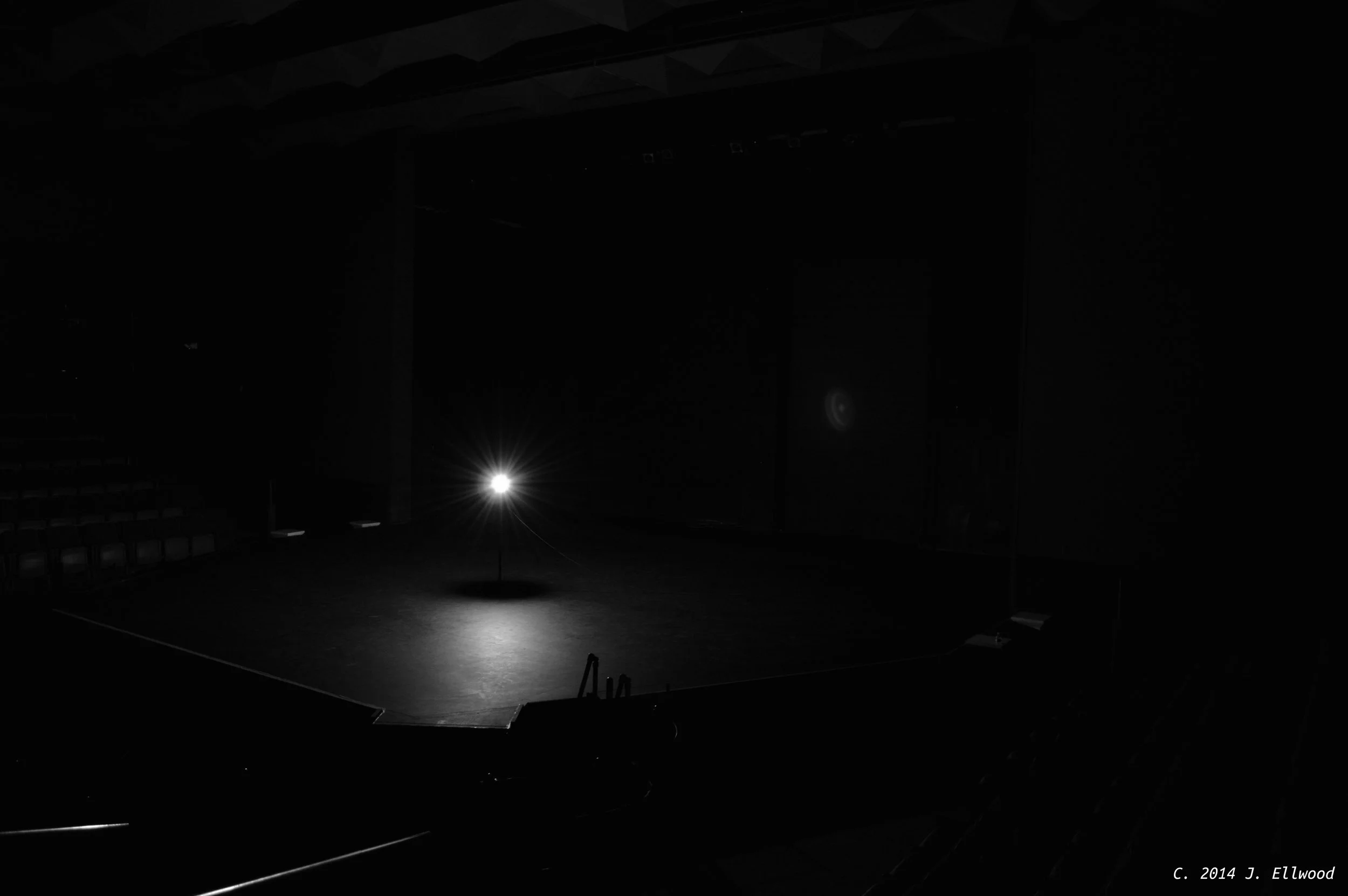
Photo: "Ghost Light on Stage" by Ellwood jon, CC BY-SA 3.0, via Wikimedia Commons (https://commons.wikimedia.org/wiki/File:Ghost_Light_on_Stage.JPG)
Week of Nov 16–21, 2026
First full week of Shop Talk, our fun-fact archive on Instagram. Six days, six topics: the box that hauls your rig, the stuff you pump into the air, the tape that holds the industry together, lasers again (because we can't help ourselves), the cases that ride the truck, and the one bulb that never goes off. Here's the week in one place.
Mon, Nov 16: Chain motors 101
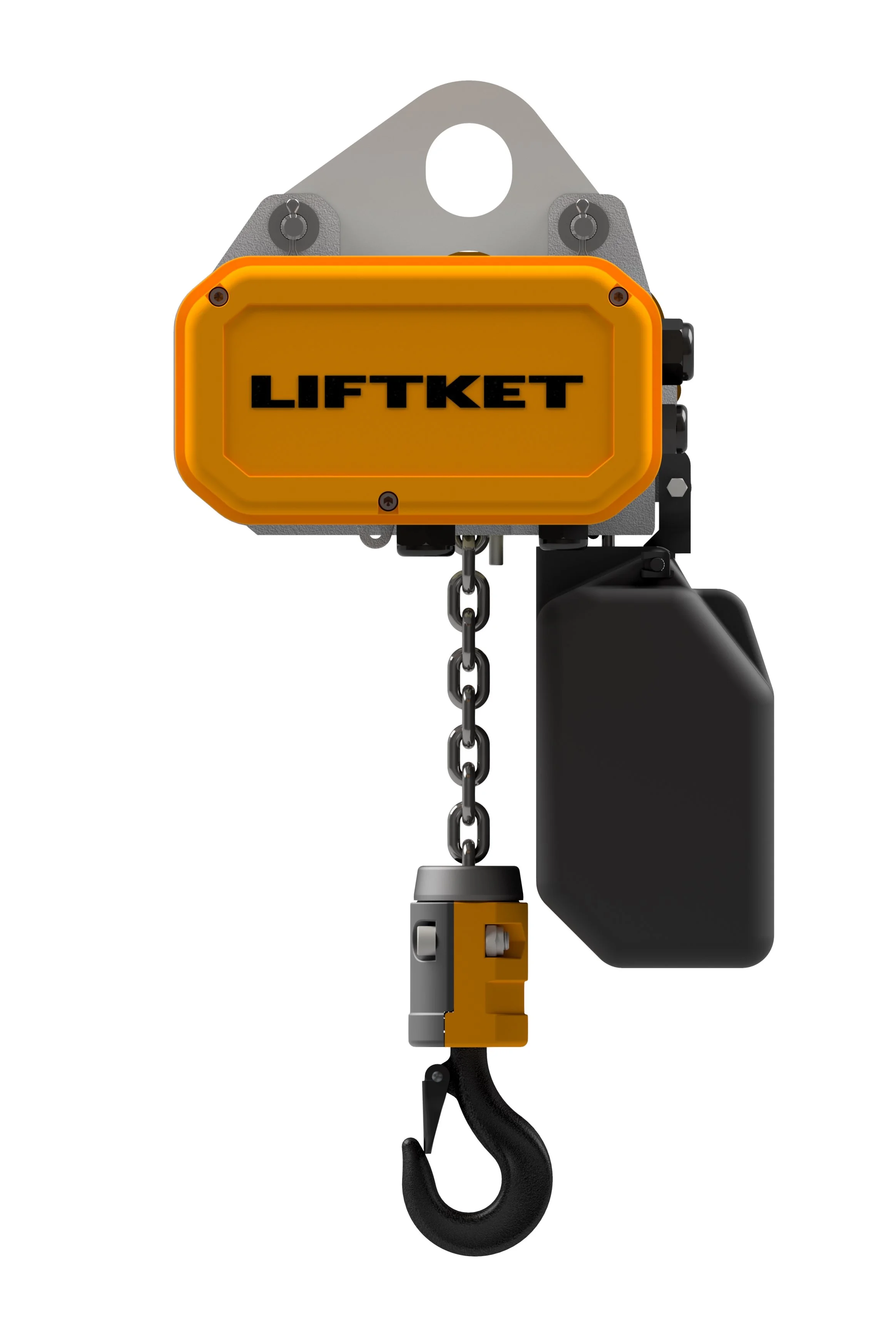
Photo: "Elektrokettenzug" by Liftket, CC BY-SA 4.0, via Wikimedia Commons (https://commons.wikimedia.org/wiki/File:Elektrokettenzug.jpg)
Every truss, PA hang and video wall you've ever stood under is riding on a box that eats chain and growls about it.
Where it came from. Columbus McKinnon launched the CM Lodestar in 1955, built for factories and warehouses, not rock shows. Then somebody figured out you could leave the motor on the deck, send the chain up, and let the hoist climb its own chain, hauling the truss with it. Industry lore credits Bill McManus, flying lights and sound for Jethro Tull around the late '60s or early '70s.
How it works. A hoist-duty motor spins a gear train that turns the lift wheel, a pocketed sprocket that grabs welded link chain. An electric brake holds the load, an overload clutch slips if you try to pick too much, and upper and lower limit switches stop it at the ends of the chain. Slack chain drops into the bag. Per CM, keep that bag no more than 75% full.
Inspect it. Frequent checks every time it goes out: brake, controls, hooks and latches, lube, wear, damaged links and twists. Periodic inspection at least once a year by a qualified person; under ANSI E1.6-2 that means a load test and written records.
Know your class. Limit switches are emergency stops, not trim marks. Never lift people. D8 hoists need a secondary safety over people; D8+ can hold a load over people but not move it; C1 can do both.
The cert. ETCP Certified Rigger (Arena or Theatre): 21+ and 30 eligibility points, earned mostly at 1 point per 100 hours of entertainment rigging work.
Tue, Nov 17: Haze vs fog vs smoke
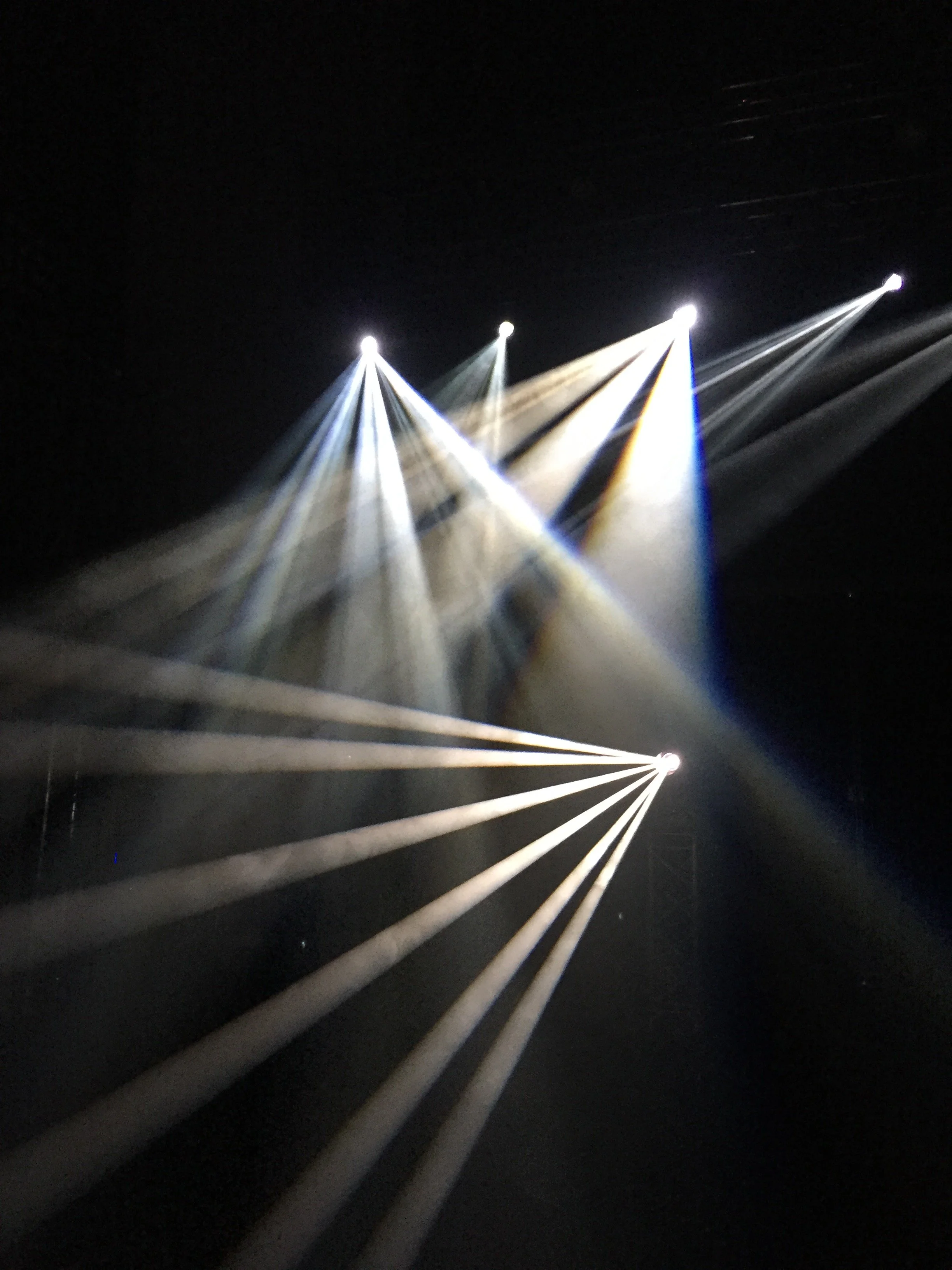
Photo: "Haze-beams" by Lumenbuddha, CC BY-SA 4.0, via Wikimedia Commons (https://commons.wikimedia.org/wiki/File:Haze-beams.jpg)
Three words crews throw around like they mean the same thing. They don't.
The old way. Greek theatre used burning pitch and torches, black powder smoke drifted across Shakespeare's Globe, and later crews cooked sal ammoniac, pumped bee smokers and lit smoke cookies. In 1831 at the Bowery Theatre in New York, the New York Mirror raved that the stage was "entirely enveloped."
Modern fog. Gunther Schaidt built glycol fog pump systems for German opera, brought them to the US in 1979, and won an Academy Award in 1984.
Plot twist: it's all fog. Fog is droplets around 2 to 5 microns: dense, billowy, drops out faster. Haze is around 1 micron or smaller, nearly invisible, hangs around and makes beams pop. Low fog is dry ice or liquid nitrogen chilling vapor so it hugs the deck.
Don't gas the cast. ANSI E1.5 glycol fog: 10 mg/m³ averaged over 8 hours, never above 40. A Mount Sinai study of 439 Broadway actors linked peak glycol exposure to throat, nose and voice symptoms. Dry ice and nitrogen fog push oxygen out of low spots, so watch pits and tight spaces.
Fire alarms. Find the detectors first, including the ones hiding in the HVAC, and talk to the building engineer, alarm company or fire department. Never bypass detection without proper procedures.
Straight from ESTA: if a little bit of fog is good, a lot of fog is not necessarily better.
Wed, Nov 18: Gaff tape vs duct tape
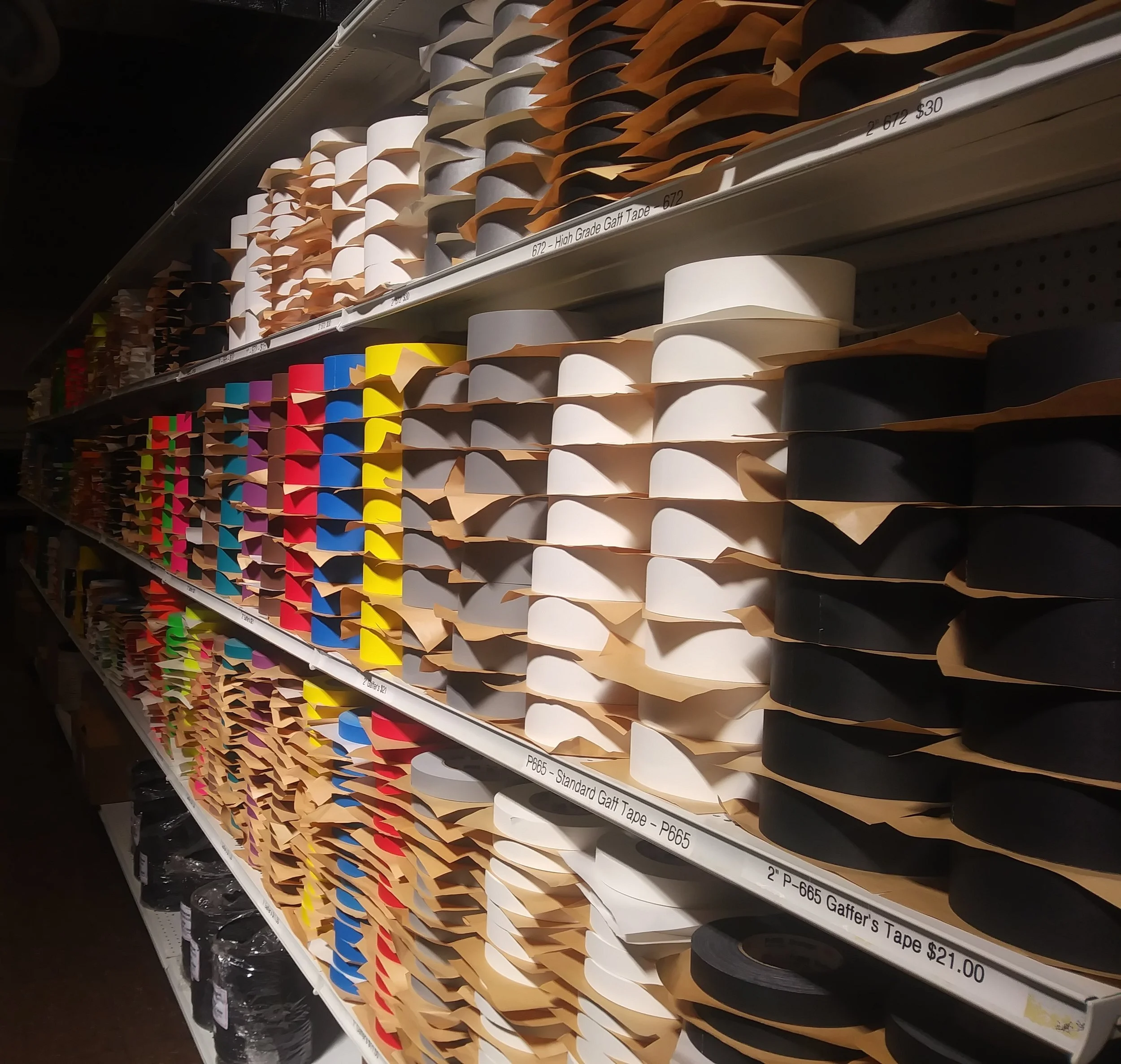
Photo: "Gaffer Tape, Black, White and Gray" by Robert.Harker, CC BY 4.0, via Wikimedia Commons (https://commons.wikimedia.org/wiki/File:Gaffer_Tape,_Black,_White_and_Gray.jpg)
Put duct tape on a stage deck and the stage manager will look at you like you kicked their dog.
Duck tape first. In 1943, ordnance worker Vesta Stoudt wrote to FDR because the paper tabs on ammo boxes kept tearing off. Johnson & Johnson's Revolite division built a cotton duck cloth tape with a waterproof coat and rubber adhesive. After the war it went on HVAC ducts, went silver, and "duct tape" stuck. It even helped build the Apollo 13 CO2 "mailbox."
Enter gaff. In 1959, cinematographer Ross Lowell put Permacel's adhesive on a fabric backing. Gaff is cloth tape that handles heat, tears clean by hand and comes off with little or no residue. The name? Nobody knows for sure; best guess is the gaffer.
On the deck. Gaff your cable runs to kill trip hazards. Spike tape marks where scenery and performers land; glow tape marks it for blackout changes.
Fun fact. Berkeley Lab tested duct sealants in 1998, and duct tape was the only one that failed, often within days. Duct tape is bad at ducts.
Gaff costs more for a reason. Treat the roll like gold and don't let it walk off with the openers.
Thu, Nov 19: Laser history, lab to arena
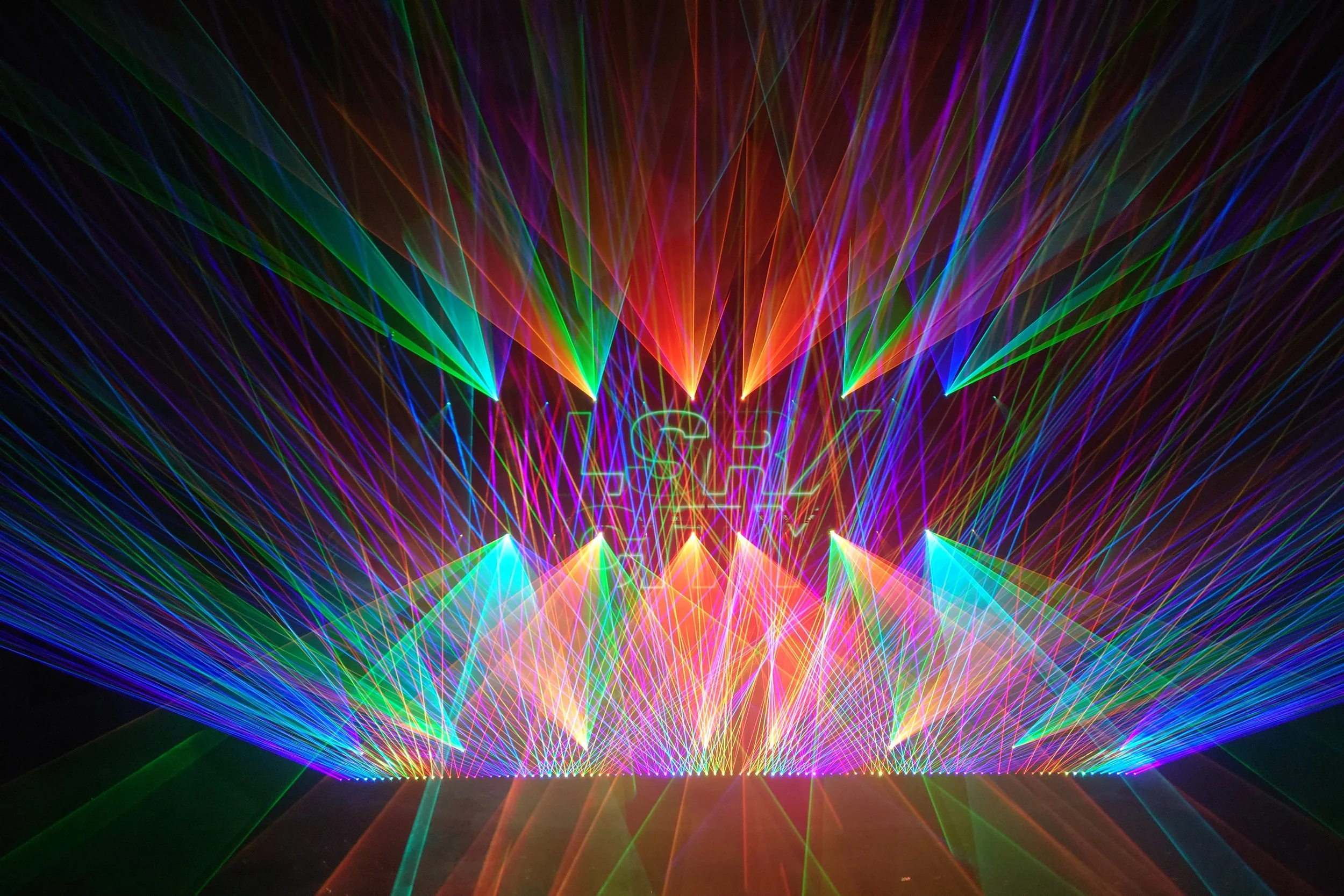
Photo: "LSRCITY rainbow lasers 01" by rickdenridder, CC BY-SA 4.0, via Wikimedia Commons (https://commons.wikimedia.org/wiki/File:LSRCITY_rainbow_lasers_01.jpg)
A follow-up to last week's laser post, timed to an anniversary.
1960. On May 16, 1960, Theodore Maiman fired the first working laser, a ruby crystal, at Hughes Research Laboratories in Malibu. By 1969, Lowell Cross, Carson Jeffries and David Tudor were scanning laser images to electronic music at Mills College, one of the first true laser shows.
Laserium. On November 19, 1973, Ivan Dryer and Caltech physicist Elsa Garmire opened Laserium at Griffith Observatory. The crew finished installing the projector at 5 a.m. on premiere day, and 700 people showed up that night. The L.A. run lasted until 2002 and Laserium played 46 cities. By the mid-'70s The Who, Pink Floyd, Led Zeppelin, Genesis and ELO were touring lasers.
Gas to diode. Laserium's 1-watt krypton laser needed 220-volt three-phase power and a wide-open water tap to stay cool. DPSS came next, then around 2013 green laser diodes landed and pure-diode projectors packed more power into smaller boxes.
Same bite. The gear shrank, the hazard didn't. In the US, Class IIIb and IV show lasers need an approved FDA variance. Get trained (ILDA's LSO course is built for shows), and never look down the barrel to check alignment.
Fri, Nov 20: Road cases and truck pack
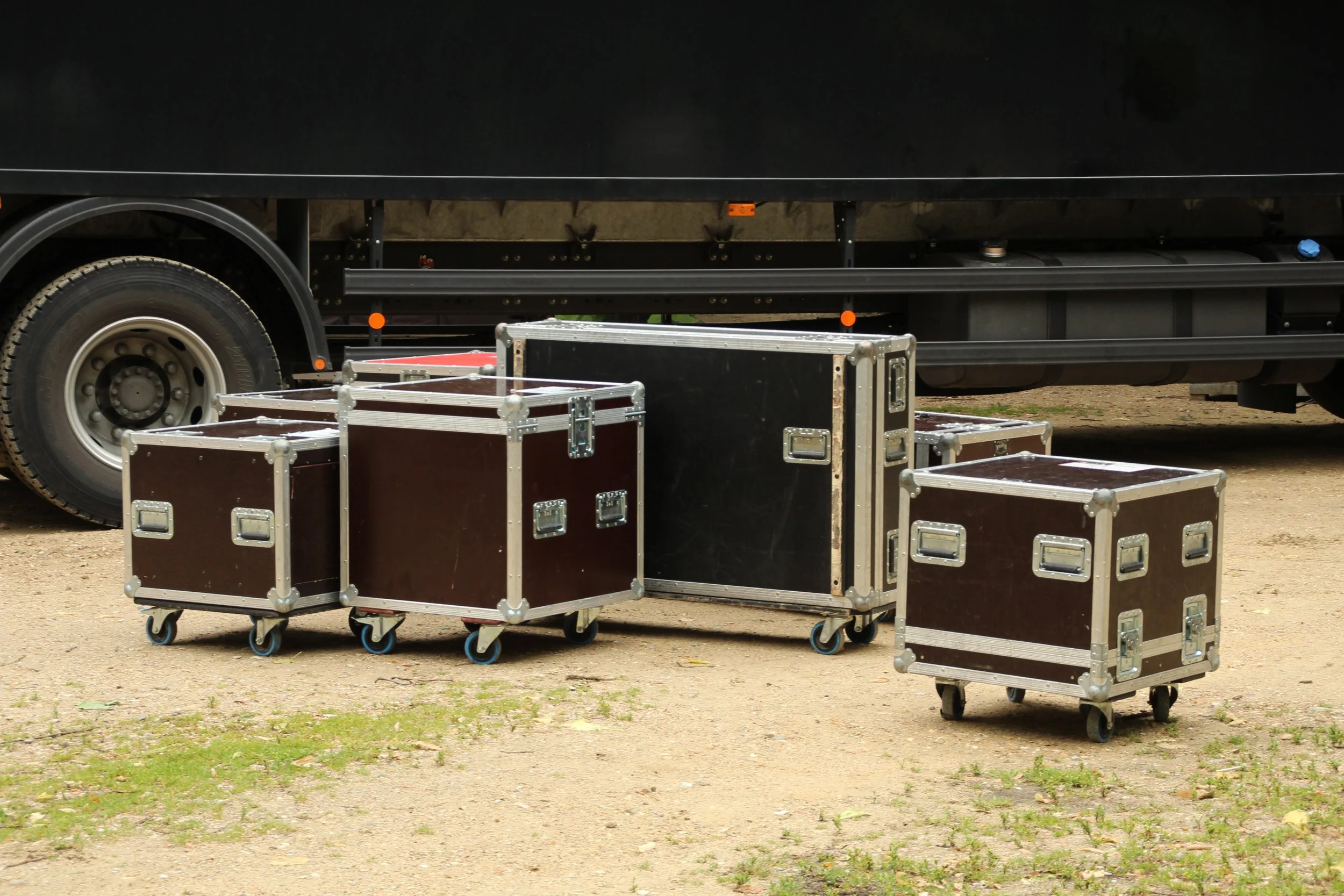
Photo: "Nuit Boréale 2013 011" by Lionel Allorge, CC BY-SA 3.0, via Wikimedia Commons (https://commons.wikimedia.org/wiki/File:Nuit_Bor%C3%A9ale_2013_011.jpg)
The name. "ATA case" comes from airline packaging: ATA Spec 300, first published Aug 1, 1960. A Category I case is built for at least 100 round trips. Most "ATA cases" on your dock were never actually certified to it.
The build. In 1952 the Vallas family started Anvil in California, building cases for traveling musicians. Classic build: birch plywood skinned in ABS or fiberglass laminate, aluminum extrusions, steel ball corners, foam cut to the gear. Early Calzone cases rolled on 3-inch casters rated at 250 lb; after one tour they went to 6-inch casters rated at 1,200 lb.
Tetris with consequences. The 22 x 30 and 22 x 45 inch sizes came from dividing the truck's width by 4, 3 or 2, minus 1/4 inch for a strap. Heavy on the floor, weight spread side to side, rows tight to the front wall, bars and straps throughout, a row off its wheels about every 10 feet. Write the pack down and run it the same every night.
Strap it or wear it. FMCSA rules say cargo has to be firmly immobilized, and tiedowns' combined working load limit has to be at least half the weight they hold. A bungee won't keep an amp rack from rolling.
Sat, Nov 21: The ghost light
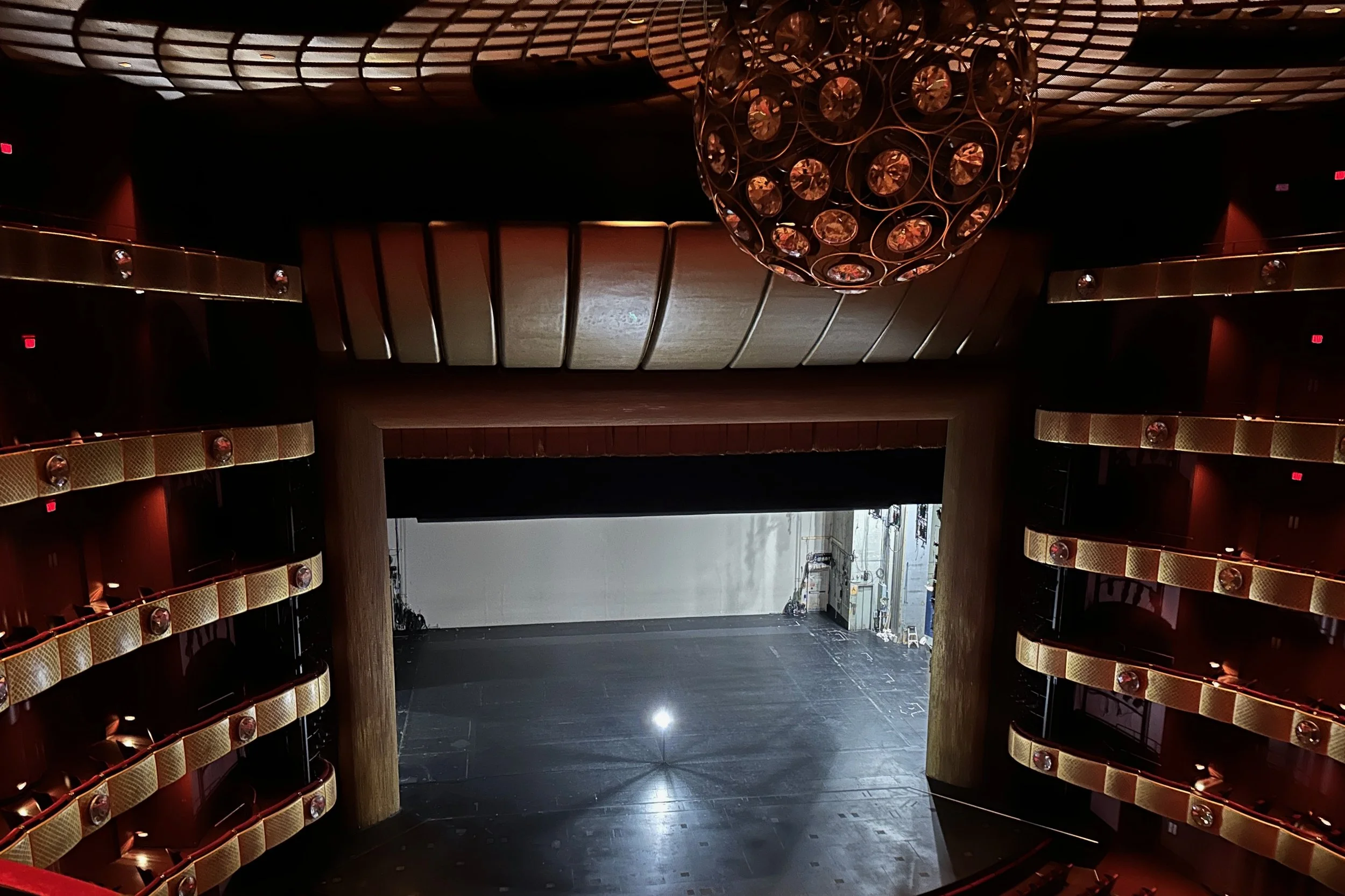


Photo: "Ghost light, David H. Koch Theater" by Zeete, CC BY-SA 4.0, via Wikimedia Commons (https://commons.wikimedia.org/wiki/File:Ghost_light,_David_H._Koch_Theater.jpg)

When the theatre empties out and everything goes dark, one bare bulb on a stand stays on, out on the stage.
Origins. Some say it started in gas-lit theatres, where dim gas lights were left burning to relieve pressure on the valves. It also goes by "Equity light," possibly from an old Actors' Equity rule. Nobody's fully nailed that one down.
The real job. Safety. It lets the last one out and the first one in find the switch and stay out of the orchestra pit. A Broadway stage manager told Playbill that without it, it's "really easy to just walk off the edge of the stage and fall." These days the advice is an LED or compact fluorescent lamp.
The lore. It lets the resident ghosts perform at night so they don't curse the show, or it scares them off, depending who you ask. London's Palace Theatre reportedly keeps two balcony seats bolted open for its ghosts.
Leave one on. In 2020, dark theatres kept ghost lights burning as a sign they'd reopen. Toronto's Royal Alex burned one through both the 1918 and 2020 pandemics.
Next week on Shop Talk
New posts Monday through Saturday on Instagram at @loadout_certified. Got a story for any of these? Drop it in the comments, and come join The Loadout Network at loadoutcertified.com.
Sources
Chain motors 101:
Haze vs fog vs smoke:
Gaff tape vs duct tape:
Laser history:
Road cases and truck pack:
The ghost light:
The Loadout Certified Team