

How does someone get into showbiz?
Every concert, arena show, festival and halftime show you've ever seen was built by a crew. Somebody pushed the cases, hung the motors, flew the PA and focused the lights, and then tore it all down and loaded the trucks before sunrise.
That crew can be you. You don't need to know anybody, and you don't need a fancy degree or a certification to get started. You need to show up, work hard, and stay safe.
Here's how it actually works, crew to crew.
What are the jobs?
"Showbiz" covers a lot of jobs. These are the ones you'll hear about on your first calls:
- Stagehand / Loader: Where most people start. You unload and load trucks, push cases, build and strike. It's the backbone of every show.
- Carpenter: Staging, set pieces, decks, masking, soft goods. If it gets built and isn't plugged in, carps probably touched it.
- Audio: PA systems, cabling, monitors, consoles. You'll start by running cable and flying speakers, and work your way toward the mixing desk.
- Lighting: Fixtures, truss, cable, dimming and data, focus. Lighting crews work closely with the riggers.
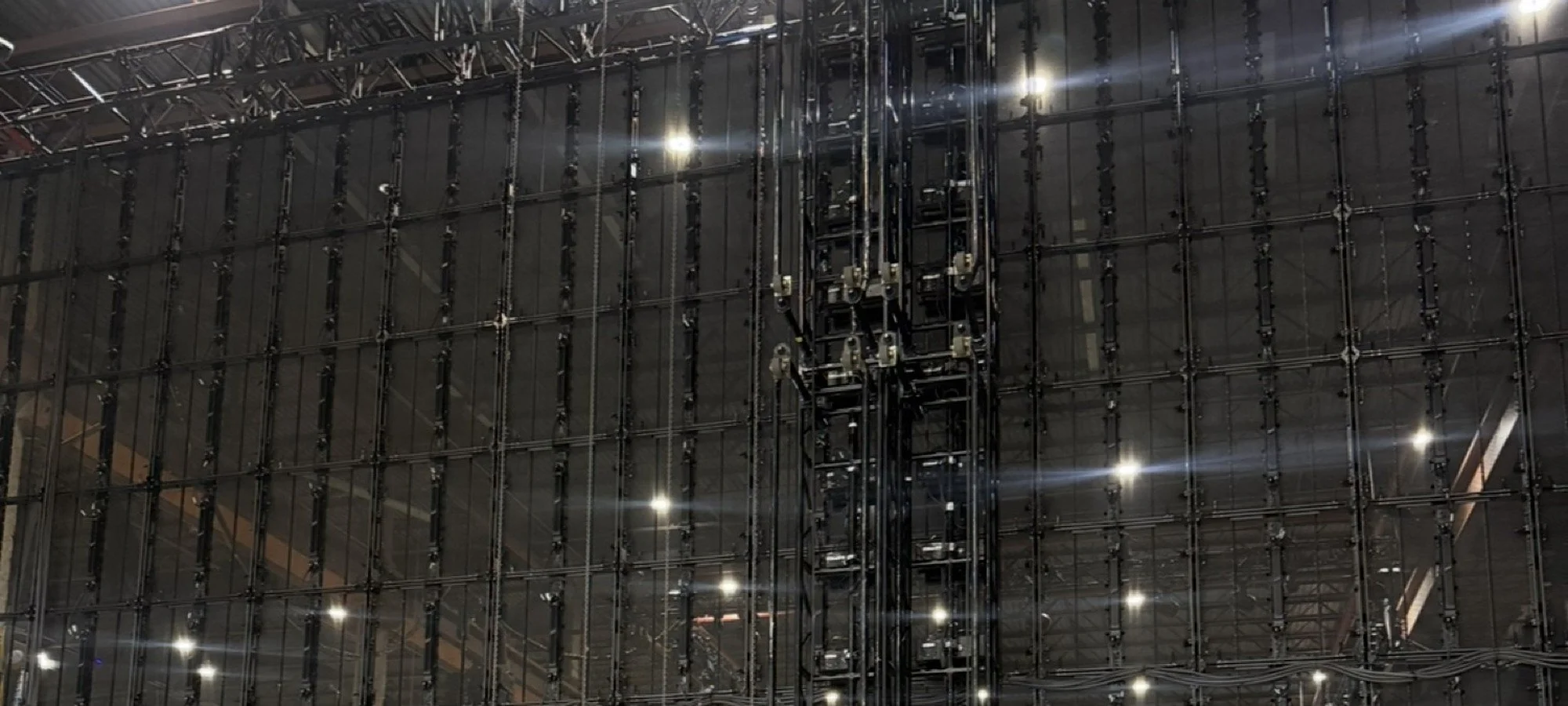
- Video: LED walls, projection, cameras, screens. Modern shows are packed with LED, and somebody has to build all of it.
- Rigging: Hanging everything that flies: motors, truss, PA, LED, scenery.
- Ground riggers work on the deck. They lay out points, assemble bridles and hardware, and send gear up.
- Up riggers (high riggers) climb and work at height in the steel or the grid, setting the points everything hangs from.
- Spot ops: Running followspots, often from a truss chair or up in the house. Takes focus, cue discipline, and not minding heights.
- Wardrobe: Costumes, quick changes, laundry, repairs. It's fast, detailed, and a lot of shows can't go on without it.
- Production Assistant (PA): Runs, errands, logistics, whatever production needs. It's a great way to see how the whole machine works.
Touring vs. local
- Local crew works the venues and events in your city. You sleep in your own bed and work for a lot of different shows.
- Touring crew travels with one show from city to city. Most touring techs started as locals, learned a department, and got noticed.
Start local. Learn everything. The road will still be there.
The two main doors in
Door #1: Your local IATSE union
IATSE (the International Alliance of Theatrical Stage Employees) represents stagehands and entertainment technicians across the U.S. and Canada. Most areas have a local.
- Find your local: use the IATSE Local Union Directory at iatse.net/local-union-directory.
- Ask about the overhire or "extra" list. Many locals call in non-members when they need more hands. Ask how their list works, how they call people, and what they expect from new hands.
- Every local is different. Rules, referral systems and paths to membership vary, so ask them directly and do what they tell you.
Be professional when you reach out: who you are, where you're located, any relevant experience, and that you're available and ready to work.
Pick your state or province to see the IATSE locals that cover it.
Nationwide locals
Don't see your area? Check the official IATSE Local Union Directory.
Directory info from iatse.net, last updated October 29, 2026. Confirm details with the local directly.
Door #2: Labor staffing companies
Plenty of concerts, corporate events, festivals and trade shows are crewed by local labor companies that supply stagehands by the call.
- Search for "stagehand labor," "event staffing," or "production labor" plus your city.
- Apply, show up for orientation, and say yes to calls, especially the early-morning load-ins and late-night outs nobody else wants.
- Reliability gets you called back. Getting called back is how you build a career.
Other doors that work
- Venues: arenas, amphitheaters, theaters, convention centers and clubs often have house crew or know who crews their shows.
- Production companies: audio, lighting, video, staging and rigging vendors hire shop and warehouse help. Prepping gear in the shop teaches you the equipment fast.
- Colleges and community theaters: technical theater programs and volunteer crews are a low-pressure place to learn tools, terms and show discipline.
Your first calls
What to bring
- Gloves: work gloves you can actually grip with.
- Crescent wrench on a lanyard: an adjustable wrench, tethered. Nothing you carry should be able to fall.
- Multitool: pliers, knife, screwdriver.
- Headlamp or flashlight: backstage, trucks and load-outs are dark.
- Steel-toe or composite-toe boots: cases roll over feet. Don't learn that the hard way.
- Blacks: black pants and a plain black shirt, no big logos, unless you're told otherwise.
- Water, snacks, a phone charger, and a way to write things down.
How to act
- Be early. On time is late.
- Be sober. No exceptions. People's lives depend on everyone being clear-headed.
- Listen first. Learn who your crew chief or department head is and follow their direction.
- Ask questions. "I don't know how to do that, can you show me?" beats guessing every single time.
- Phones away. Nobody wants to see you scrolling while the truck is half-loaded.
- Take every load-out. It's the hardest part of the day, and it's where crews remember who stuck around.
- Stay humble. Whatever you did before, on day one you're the new hand. Earn it.
Safety culture: the basics
Safety on a show site isn't optional, and it isn't somebody else's job.
- Hard hats when there's work overhead or when the site requires them, and that's most load-ins.
- Never stand under a load. Not a motor going up, not truss being flown, not "just for a second."
- Wear your PPE: boots, gloves, hard hat, eye and hearing protection as the job calls for, and fall protection when working at height (only if you're trained and authorized).
- Speak up. If something looks wrong, say so. Anyone on a crew can call a stop. Good crews thank you for it.
- Know your limits. If you're not trained for it, don't do it. Get trained first.
Our motto: Fearless; never careless.
Becoming a rigger
Rigging is one of the most respected and most serious jobs in live events. Here's the honest path:
- Start on the ground. Ground rigging is where you learn the gear: shackles, spansets, steel, bridles, motors and how a point comes together. Good up riggers depend on good ground riggers.
- Learn under experienced riggers. Knots, hardware, load paths and rigging math aren't things you pick up from a video alone. Work next to people who've done it for years, and ask questions.
- Get proper fall protection training before you work at height. Climbing without training and the right gear isn't brave, it's dangerous.
- Log your hours. Keep a record of every rigging call: date, venue, show, employer, contact and what you did. You'll want it later.
Do I need a rigging certification to start?
No. You do NOT need a certification to start working on a crew or to start learning rigging.
The certification most people mean is ETCP (the Entertainment Technician Certification Program). It offers two rigging certifications:
- ETCP Certified Rigger - Arena: chain hoists and truss systems suspended from overhead structures.
- ETCP Certified Rigger - Theatre: counterweight, mechanical and hydraulic systems, usually permanently installed in theaters.
These are meant for experienced riggers. ETCP uses a points system based mostly on documented rigging work experience (some education, apprenticeships and internships can count too), plus a minimum age requirement. You have to earn your eligibility before you can sit for the exam.
That's why logging your hours from day one matters. For current eligibility rules, points and application details, go straight to the source:
- ETCP Rigger - Arena / Theatre: etcp.esta.org/certify/certify_rigger.html
- ETCP certification overview: etcp.esta.org/certify/certify.html
Some venues, employers or locals may have their own training or certification requirements for certain work. Always ask.
Coming from another trade? You're ahead.
A lot of great crew came from somewhere else. If you've done any of these, you already have skills that carry over:
- Construction: tools, job-site safety, reading plans, working with a crew.
- Landscaping: early starts, physical work in any weather, equipment, finishing the job.
- Military: discipline, teamwork, chain of command, staying calm under pressure.
- Climbing: comfort at height, knots, respect for gear and systems.
- Arborist work: rope work, working aloft, rigging loads, and a serious safety mindset.
- Mechanics: troubleshooting, tools, and keeping machines running under pressure.
- Plumbers: problem-solving, fittings and systems, working in tight spots.
- Heavy equipment operators: spatial awareness, load sense, and respect for big moving things.
- Theater kids: you already know cues, show discipline, and that the show must go on.
- Electricians, welders and other trades: you already know how to work and how not to get hurt.
Anyone looking to work hard and have a good time doing it belongs here. Show up with that work ethic and a willingness to learn the entertainment way of doing things, and people will notice.
Got questions? We've got you.
Loadout Certified is run by working crew, for working crew and the people trying to join us.
- Follow @loadout_certified for crew tips, gear, safety and real show life.
- Join the Loadout Network (coming soon): follow and DM us to get on the list.
- DM us your questions. Career changer? Wondering where to start in your city? Not sure about certs? Ask. Someone asked before you, and someone will ask after.
See you on the load-out.
Fearless; never careless.